What is Jesmonite
Jesmonite is a compound made from two parts. You have the liquid (which in my case is the jesmonite AC100) which is an acrylic resin and the powder is made from Calcium Sulphate or better known as plaster of paris or gypsum. The best thing about Jesmonite is that it's non toxic and can be used with children (under supervision).
In this blog we will talk about all the questions we had when we started using this fantastic material to give you as much information as possible to help you on your crafting way.
If there's anything we have missed, ideas or techniques which you use please feel free to add to the comments at the bottom of the page and we can keep you updated.

The look of Jesmonite
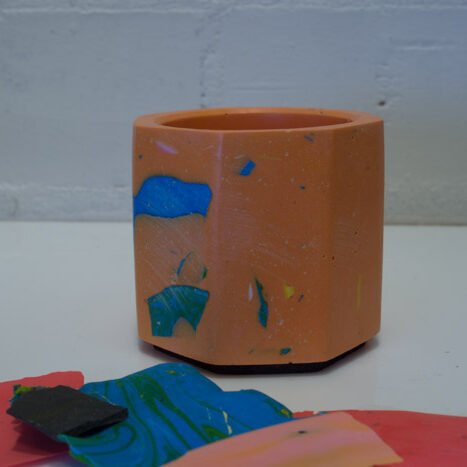
When we create products using Jesmonite we use silicone moulds. These moulds have smooth edges but can vary with what the mould has been cast around. Some can have straight edges and some can have geometric faceted sides to give dimension.
Jesmonite can be used straight from the mould if that's the look you're going for. You get a rustic cement pot look. Personally I love this look. If you want to you can take it a step further by using wet and dry sandpaper and smoothing off the edges. It does take some time as this stuff sets up pretty hard. The best way I've found is using a little bit of water to help sanding.
Jesmonite when you first mix it is a milky plaster colour. You can then add pigments to make it to any shade you like. I'll go into colouring and mixing later on.


Things to make with jesmonite
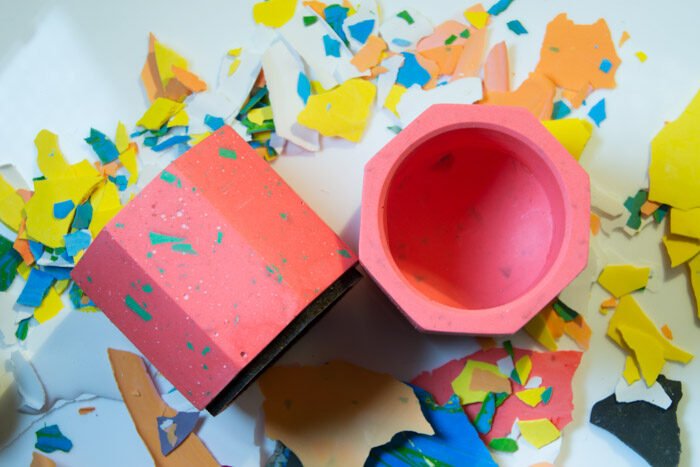
Jesmonite is such a versatile material. We are still playing with the stuff and haven't scratched the surface yet. We Currently make and sell mini tealight candle holders, coasters and plant pots for succulents.
Here is a list of ideas to get you going.
- Jewellery. Rings, earrings, plendants
- Plant pot holders
- Candle holders
- Plates
- Clocks
- Soap dish holders
- Vase for you flowers
- Sculptures
If you put your mind to it it can be made.
How to use jesmonite
Jesmonite is so easy to use. We use the AC100 which is a water based acrylic resin. You use it in a 2.5:1 ratio by weight. If you are adding colour we use the resin8 pigments.When using these we use no more than 2% per weight of the mixture or as stated in the instructions.
We like to use paper cups so we don't add more plastic to the earth. Make the mix/paste up as per instructions and add colour or colours of your choice.
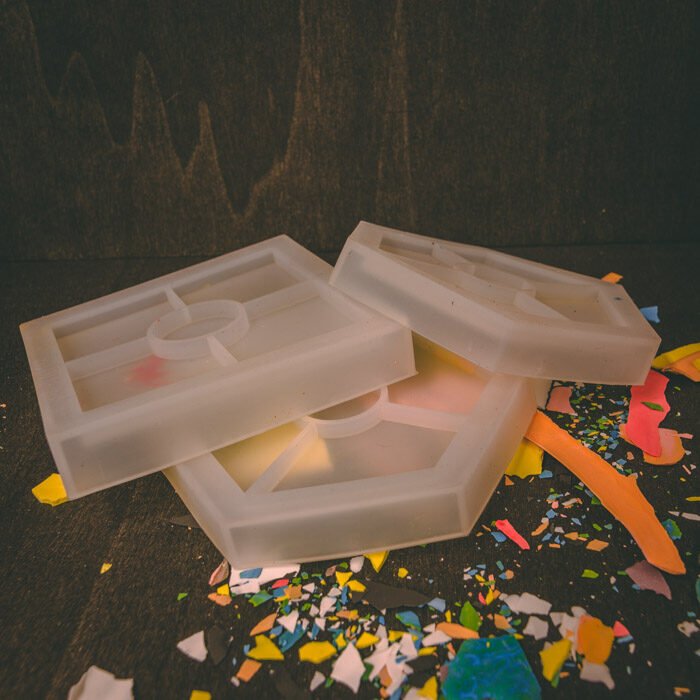
Use silicone moulds of different shapes and sizes i.e coasters and plant pots or even pen holders. Make sure you get decent quality ones as we find the side walls on some cheaper moulds are thin and distort the final product.
Make sure the mould is dirt and dust free. The joy of using silicone is you don't have to use any mould release.
Place the mould on a flat/level surface and pour in the jesmonite mix slowly. This will help it flow into the corners and you hopefully won't get any trapped air bubbles. Once all the mix is in your mould, tap the sides gently. This will help bring any air bubbles to the top.
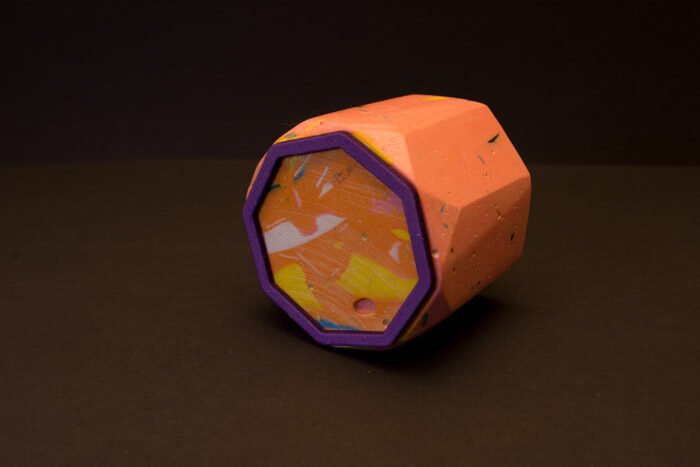
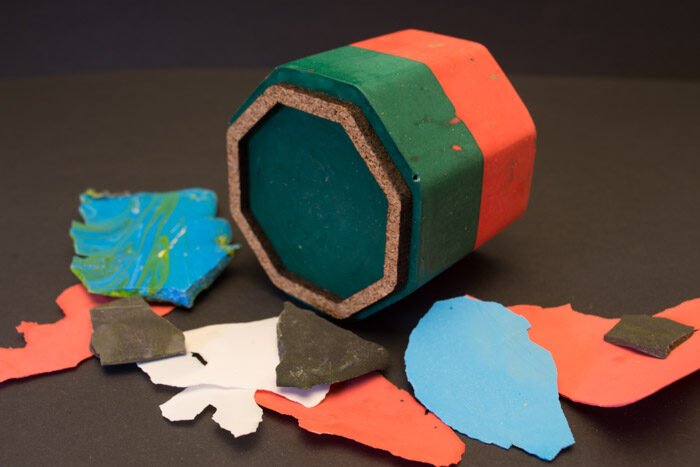
Leave to set for the recommended time then demould. You can sand and smooth whilst the jesmonite is still a little soft or leave it so it has a rustic appearance. Make sure you sand the base flat. We like to finish our bases off the either cork of a colourful neoprene foam.
And last but not least, get your acrylic sealer and follow instructions for use and ratios. This will help protect your creations for many years.

How strong is it and benefits
Here are the properties of Jesmonite
- Compressive strength 25 –30 MPa
- Tensile strength (UTS) 25 –35 Mpa
- Bending elastic limit (LOP)15 –20 Mpa
- Bending strength (MOR)50 –65 Mpa
- Youngs Modulus 5 –6 Mpa
- Impact strength (Charpy)30 KJ/m²
After you have let your castings cure for 24-48 hours it will be fully hardened. It has a very robust structure, highly impact resistant and strong enough to stand on. You can also mix through fibreglass for more strength and structure. As previously mentioned as jesmonite is a non toxic and non flammable compound it makes a great alternative.
Types of moulds to use
The easiest type of moulds to use are silicone. These come in all different shapes and sizes. Make sure they are clean and pour your mixture in, it's that easy. You can make your own moulds with silicone mix. This way you can make them as unique as possible. We have a laser cutter so I'm planning on testing and making some exciting designs from acrylic.
Like making a mould for resin pouring you can use a piece of melamine for the base and sides, tape them up so your mixture doesn't stick. This method is perfect for square or rectangular form.
If you want to get creative you can use thin (maybe 1mm) plastic and blend it to create your form. Remember to use a glue gun (hot glue) around the base so your mixture won’t come out. This does make a mess and a pain to clean.


How to do marbling
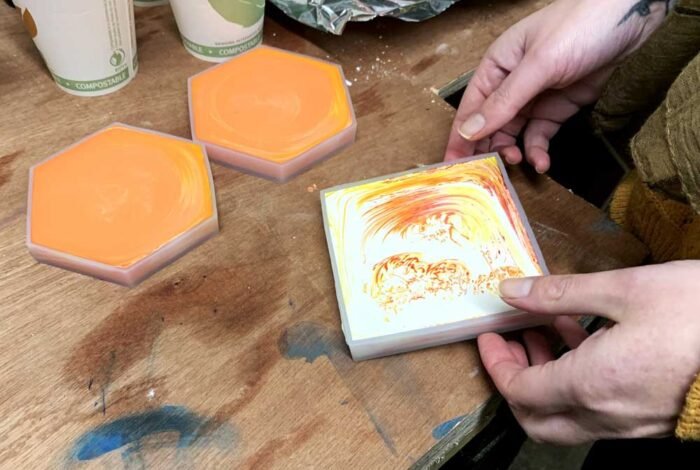
Marbling is such an awesome effect. With just a few drops it can make so many unique designs. To make the marble effect simply make up a colour base as you normally would (let's say blue). I like to use a colour wheel and find which colours go well together.
You can then make a base colour of say blue and to spice things up add a splash more colour (literally). Grab yourself a cocktail stick and dip it in your pigment. Use a colour that will really stand out. Use a yellow or even a white. After you have dipped your cocktail stick in, give it a flick and try not to make the blobs too big as the pigment won't set. This will cause issues when applying the waterproofing later on. Once you think you have the right look, pour the mixture slowly into your mould of choice and tap to remove any air bubbles. You can either do this by tapping the mould with your fingers or tap your worktable (be careful not to mark your table).
Leave to set for around 15-20 minutes at around 18’c or to be sure 30 minutes will be fine. Don't leave it any longer than 2 hours in your moulds or it will sweat.

How to do terrazzo
Terrazzo is basically a jesmonite base colour with crushed sheets of different coloured jesmonite mixed through.
Simply make up a few colours of jesmonite and pour them out onto a couple of sheets of silver foil. Once they are set, crush them up and mix them together or keep separate for different projects. Don't crush the sheets too small as you will want some nice chunks of colour to come through in your final design.
Make up a base colour of jesmonite to the specs on the container then add your crushed jesmonite to the mix. Pour your mix into a silicone mould, you may need a stick of some kind to push the crushed jesmonite into gaps and space them out.
Let the design cure for the recommended time then pop it out the mould. To make your terrazzo pop, get some sandpaper of different grits, sand until your crushed jesmonite comes out in the design.
.